Preparing fragile waste for safe pickup: packing tips for UK homes
Fragile waste is one of those household jobs that looks simple until the first item cracks, leaks, tears through a bag, or becomes awkward to carry. If you are getting ready for a curbside collection, a council large-item pickup, or a private rubbish removal team, preparing fragile waste for safe pickup is about more than putting things in a box and hoping for the best.
The right packing method keeps you, your household, and the collection crew safer. It also reduces breakages, helps the waste move through handling more cleanly, and can make it easier to sort recyclable items from general rubbish. In UK homes, that might mean wrapping broken glass, securing chipped ceramics, separating sharp edges, and making sure loose contents do not spill in a hallway, stairwell, or shared entrance.
This guide walks through the practical side of the process: what counts as fragile waste, how to pack it, what to avoid, which materials help most, and when a professional collection service is the smarter option. If you are clearing a flat, tidying before an end of tenancy clean, or simply trying to get rid of awkward household debris without drama, you will find a calm, usable system here.
For readers managing a bigger home clear-out, the approach also fits neatly alongside wider clearance planning. You can pair this with services such as home clearance, house clearance, or flat clearance when fragile items are only one part of the load. And if you are in the middle of a property handover, it can help to review a related guide such as flat cleaning and preparation tips for SW3 homes so the whole space is ready in one go.
Table of Contents
- Why preparing fragile waste for safe pickup matters
- How fragile waste packing works
- Key benefits and practical advantages
- Who this is for and when it makes sense
- Step-by-step guidance
- Expert tips for better results
- Common mistakes to avoid
- Tools, resources and recommendations
- Law, compliance, standards, and best practice
- Options, methods, and comparison table
- Case study or real-world example
- Practical checklist
- Conclusion
- Frequently asked questions
Why Preparing fragile waste for safe pickup: packing tips for UK homes Matters
Fragile waste is not just messy. It can be physically hazardous, awkward to move, and easy to mishandle if it has not been prepared properly. A single bag of broken crockery or a loosely wrapped mirror can become a sharp-edged problem the moment someone lifts it, shifts it in a van, or sets it down too hard.
In real household situations, the risks usually come from familiar things: smashed glass from a photo frame, a cracked lampshade, broken plates, chipped tiles, old decorative items, or the remains of a damaged household object after a move. These items are often lightweight, but they can still cut hands, puncture sacks, or scatter fragments across floors and pavements.
Good packing also matters because collection crews work quickly. Whether you are using council waste collection, a bulky waste service, or a private rubbish removal provider, staff need to assess what is inside a bag or box at a glance. Neat packing reduces delays, helps with safer lifting, and makes it easier to keep recyclable material separate from general waste.
There is also a practical side to this that people sometimes overlook: properly packed fragile waste is less likely to be rejected at the kerb. Nobody wants to spend a morning rewrapping a box because one sharp item was visible through a torn bag. Truth be told, an extra five minutes with tape and cardboard often saves a lot of hassle later.
If your clear-out is part of a wider refresh, it can be useful to combine the waste job with home cleaning or room-by-room preparation. For example, some households schedule collection after a deeper reset such as domestic cleaning or house cleaning, while others simply want the load removed before they start decorating again.
Expert takeaway: the safest fragile-waste pickup is usually not the fastest one. It is the one where the contents are contained, the weight is balanced, and no one has to guess what is inside.
How Preparing fragile waste for safe pickup: packing tips for UK homes Works
The process is straightforward once you break it into stages. You sort the fragile items, group similar materials together, package them with enough cushioning, label them clearly when needed, and place them somewhere safe for collection day.
In practice, that means thinking like the person who will lift the load. Can they tell at a glance whether the box contains broken glass? Will the bag hold together if it tilts? Is the weight manageable? Are any sharp edges still exposed? If the answer to any of those questions is "not quite," the packing needs another pass.
Different collection routes also affect the method. A council kerbside collection may require more visible and tidy presentation. A private waste removal team may handle the loading for you, but they still benefit from secure packing because it reduces risk during transport. If you are clearing multiple bulky items too, services such as bulky waste collection or large item collection may be relevant alongside your fragile waste prep.
The basic logic is simple:
- Identify what is fragile, sharp, breakable, or likely to leak.
- Separate it from soft waste, electronics, and mixed rubbish.
- Wrap or pad each item so fragments cannot escape.
- Put smaller items into a strong inner container.
- Place that container inside a tougher outer sack or box if needed.
- Mark the package clearly if the contents could cut or spill.
- Store it upright, dry, and away from high-traffic areas until pickup.
That is the core workflow. Everything else is refinement.
Key Benefits and Practical Advantages
When fragile waste is packed correctly, the benefits are immediate and very visible. It is not just about avoiding cuts. It improves the whole pickup process from the front door to the vehicle.
- Safer handling: wrapped edges and contained fragments reduce the chance of injury.
- Cleaner collection: fewer loose shards on floors, pavements, and vehicle loading areas.
- Better sorting: clear separation can help with recycling and disposal choices.
- Less damage in transit: a stable package is less likely to burst or collapse.
- Faster pickup: crews spend less time checking and repacking.
- Lower stress: the job feels manageable rather than chaotic.
There is a subtle benefit too: well-prepared waste tends to make the whole property feel more organised. That matters in small flats, shared stairwells, and busy family homes where a loose pile of broken items can stay in the way for days. If you are dealing with a room that needs to be emptied quickly, pairing your waste prep with careful soft-furnishing care or a targeted clear-out approach can make the space feel reset sooner.
For landlords, tenants, and homeowners alike, there is also a reputation benefit. Collection teams appreciate clear access and decent presentation. It is a small thing, but it can make an otherwise messy job feel much more controlled.
Who This Is For and When It Makes Sense
This topic matters to a wide mix of UK households, not just people with a large clear-out on their hands. If any of the following sounds familiar, you will likely benefit from a more careful packing routine.
- Households with broken household items: chipped crockery, cracked mirrors, damaged ornaments, glass shelves, picture frames, or shattered lamp parts.
- People moving home: accidental breakages happen during packing, lifting, and transit.
- Tenants preparing to move out: safe and tidy waste presentation can help keep the property cleaner before check-out.
- Families doing seasonal decluttering: a home reset often uncovers delicate items that cannot just be thrown into one bag.
- Older properties and flats with limited storage: safe temporary holding is especially useful when collection is not immediate.
- Anyone using council or private pickup services: a neat package makes the process simpler regardless of who collects it.
It also makes sense when fragile waste is mixed with heavier rubbish. For example, a box of broken ornaments might be paired with old shelving, worn-out homeware, or a small appliance that needs a separate route. In those cases, a service like waste clearance or rubbish clearance may be more practical than trying to manage everything through standard household sacks.
If you are in West London, you may also find it useful to browse the broader service and area pages on the cleaners side for context, such as the services overview or the local W10 carpet cleaning service, especially if the pickup is part of a deeper home reset.
Step-by-Step Guidance
The safest way to handle fragile waste is to keep the process calm and sequential. Rushing is where most problems start. Start with a clear floor or table, gather your packing materials, and give yourself enough room to work.
1. Sort everything before you wrap anything
Separate fragile waste into simple groups: glass, ceramics, sharp mixed debris, and items that may leak or crumble. A broken vase should not sit in the same pile as a cracked ceramic mug if you can help it. Grouping items first makes packing cleaner and reduces the chance of cross-contamination between materials.
2. Remove anything unsafe or unsuitable
If an item contains batteries, chemicals, or electrical parts, stop and check its disposal route. Fragile waste is not always ordinary rubbish. Some things need special handling. A broken lamp with exposed wiring, for example, should not be bundled casually with general waste. Likewise, a damaged fridge or white good is not something to improvise with; a dedicated route such as fridge disposal or white goods recycling may be more appropriate.
3. Wrap sharp or breakable pieces individually
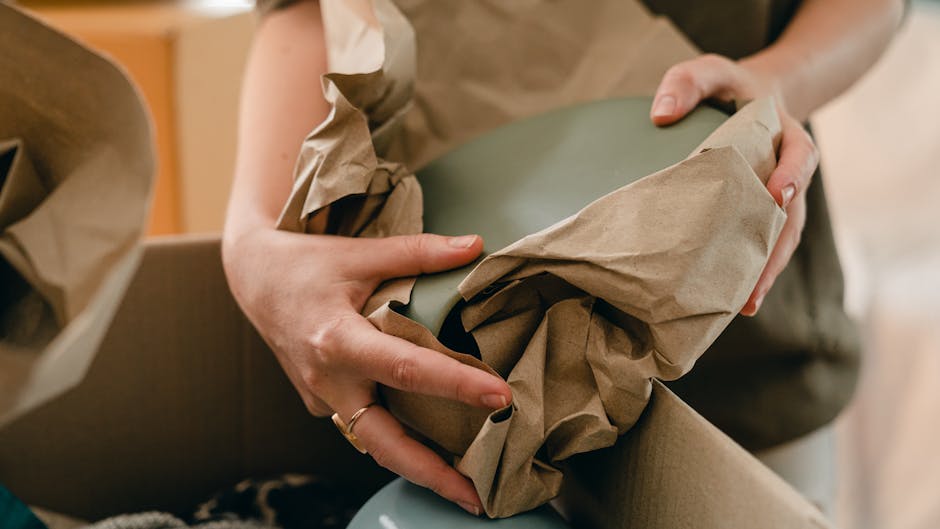
Use newspaper, packing paper, cardboard, bubble wrap, or thick cloth. The aim is to stop fragments moving around and to blunt sharp edges. For glass, wrap in several layers and tape it securely. For ceramics, focus on keeping splinters contained rather than creating a perfect gift-wrap job. We are after safety, not presentation.
4. Build a strong inner container
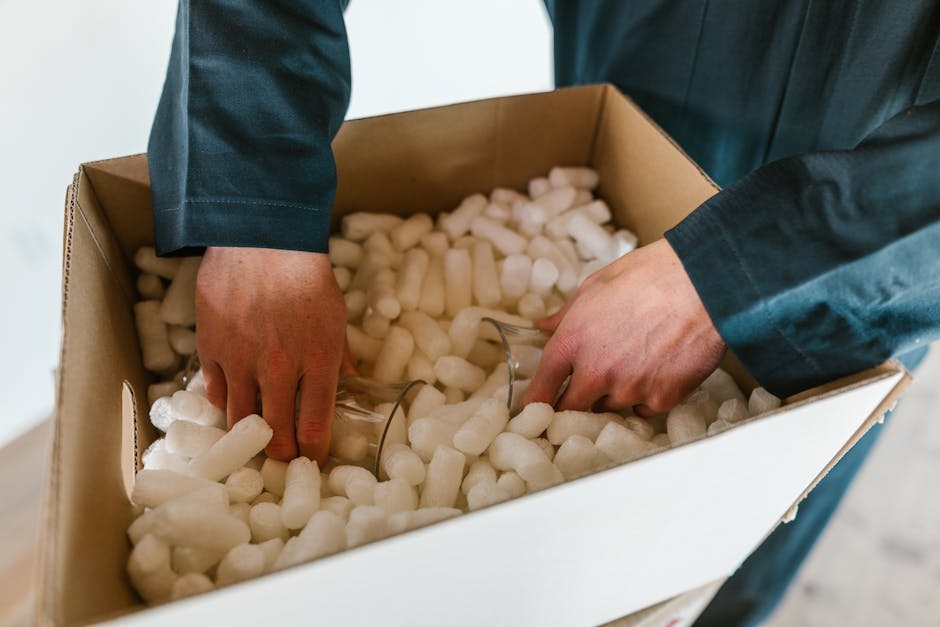
Small items are best placed in a rigid box or sturdy sack lined with cardboard. If the contents are especially sharp, place a folded layer of cardboard at the bottom and around the sides. This gives the package structure and helps prevent punctures.
5. Fill gaps so nothing shifts
Loose movement is one of the biggest reasons fragile waste breaks open again. Use scrunched paper, old towels, or cardboard offcuts to fill empty space. A box that does not rattle is usually a safer box.
6. Seal and reinforce the outside
Tape down the flaps, reinforce the base, and check the handles if it is a sack or bag. For heavier packages, use more than one strip of tape rather than a single token line across the top. If the package feels weak in your hands, it probably will not improve by itself on the pavement.
7. Label clearly when the contents could cut or spill
A simple note such as "broken glass" or "sharp ceramics" is often enough. Labelling helps anyone handling the package to know what to expect. Keep it readable, simple, and visible from the outside.
8. Store it safely until collection
Put the package somewhere dry, upright, and out of the main walkway. Avoid doorways, stair edges, or anywhere children or pets might brush against it. If you live in a shared building, consider the route the package will take on collection day so you are not carrying it through a crowded corridor at the last minute.
If you are clearing a whole room, you can also use the opportunity to organise the remaining furniture. That is the moment many people realise how much easier a coordinated clearance can be. A little planning now can save a lot of awkward shuffling later.
Expert Tips for Better Results
There are a few small habits that make fragile waste packing noticeably better. None are dramatic, but they add up.
- Use double containment for very sharp items: wrap first, box second, and then place the box inside a stronger outer sack if needed.
- Keep similar items together: glass with glass, ceramics with ceramics, and mixed debris separate unless the disposal route says otherwise.
- Mind the weight: a lightly packed box can still be too heavy if all the weight sits on one side.
- Use rigid corners for mirrors and picture glass: cardboard corner protectors are excellent for reducing edge damage.
- Think about weather: wet cardboard loses strength quickly in rain, which is not ideal on a collection morning in the UK.
- Never overfill a bag: a bag that bulges around sharp objects is a tear waiting to happen.
One of the best practical tricks is to tap the side of the package gently after sealing it. If you hear movement or feel hard edges shifting, reopen it and add padding. That tiny check can prevent a mess at the kerb.
Another good habit is to keep a small "fragile waste kit" at home: parcel tape, marker pen, thick gloves, a couple of cardboard boxes, and a roll of old newspaper or paper fill. It sounds very organised, perhaps even slightly overprepared, but when a glass shelf breaks on a Sunday evening, you will be glad it is there.
For households that regularly clear rooms or manage moving-out jobs, pairing this with property-clearing routines or a wider house clearance plan can make the process much easier to manage.
Common Mistakes to Avoid
Most packing errors are easy to prevent once you know what to look for. The problem is that fragile waste often gets treated like ordinary rubbish, and that is where trouble starts.
- Throwing sharp items straight into a thin bag: this is the quickest route to punctures and cuts.
- Mixing loose glass with soft waste: the glass shifts and works its way out.
- Using damaged boxes: a box that is already soft or crushed will not protect anything for long.
- Forgetting to tape the base: many boxes fail from underneath, not from the top.
- Overloading a single package: one heavy box is harder to carry and more likely to split.
- Leaving exposed edges: if you can feel a sharp point, the person collecting it probably will too.
- Assuming all breakables go in general waste: some items need specific routes or separate handling.
A subtle but common mistake is packing by shape instead of risk. People often try to fit awkward items into one neat container because it looks tidy. But a tidier package is not always a safer one. The safer option may be two smaller boxes rather than one impressive, dangerously overloaded monster.
Another issue is poor timing. Packing fragile waste the same morning it is due to go out often leads to rushed taping and missing labels. If you can, prepare it the evening before and do a quick final check in daylight.
Tools, Resources and Recommendations
You do not need specialist equipment, but the right simple tools make a big difference. Most homes already have half of what is required.
| Item | Why it helps | Best for |
|---|---|---|
| Strong cardboard boxes | Give structure and protect edges | Glass, ceramics, mixed fragile items |
| Packing paper or newspaper | Cushions and fills gaps | Smaller breakables and loose fragments |
| Parcel tape | Secures flaps and weak joints | Reinforcing boxes and sacks |
| Marker pen | Helps label contents clearly | Safety notes and sorting |
| Thick gloves | Protects your hands while handling shards | Broken glass and sharp ceramics |
| Old towels or cloth | Adds soft padding without wasting money | Delicate or irregular items |
If you are organising a bigger clearance, it can also help to bookmark relevant service pages before you begin. For example, households with furniture and breakables in the same room may look at furniture disposal, sofa collection, or mattress collection to plan a fuller pickup.
For trust and process reassurance, useful background pages include insurance and safety information, health and safety policy, and the rubbish provider's recycling and sustainability approach. These pages do not tell you how to pack a box, of course, but they do help you understand the standards behind the service.
Law, Compliance, Standards, or Best Practice
For most homes, fragile waste packing is guided more by good practice than by a complex legal rulebook. Still, there are a few important points to keep in mind.
First, you should always follow the instructions of your local council or waste contractor. Collection rules can differ depending on whether the item is for general waste, bulky waste, recycling, or a special collection. Councils may ask for items to be presented in specific ways, especially if there are sharp edges or broken glass.
Second, do not place hazardous or specialist waste into ordinary rubbish unless you are certain it is accepted there. That includes items with chemicals, batteries, electrical components, or residues that could leak or contaminate other waste streams. If in doubt, check the disposal route before the pickup day.
Third, if someone else is handling the waste, your packing should make their job safer. That is the practical standard to work to. Wrap sharp items, avoid overfilling, keep packages stable, and label where useful. These are not just "nice to haves"; they reduce risk.
If you are using a private carrier or licensed rubbish removal provider, it is sensible to review their public safety and policy information first. Pages such as health and safety policy, insurance and safety, and terms and conditions help set expectations around what can be collected and how items should be prepared.
Where recycling is concerned, best practice is to keep recyclables as clean and separate as you reasonably can. A broken glass item mixed with food residue or general rubbish may no longer be suitable for recycling, so sorting matters. This is where a bit of extra care pays off.
Options, Methods, or Comparison Table
Not every fragile-waste situation needs the same method. A quick comparison can help you choose the most practical route.
| Method | Best when | Pros | Watch out for |
|---|---|---|---|
| Single-box wrap | You have a small amount of lightly broken items | Quick and simple | Can be too weak if the box is flimsy |
| Double containment | You have sharp or very delicate debris | Safer, cleaner, more secure | Takes a little longer to prepare |
| Bag plus cardboard reinforcement | You have mixed household fragments | Flexible and economical | Needs careful taping and checking |
| Dedicated collection by a waste team | You have several awkward items or limited time | Less lifting and less hassle for you | May require clearer access and item grouping |
For many homes, the best option is not one method alone but a combination. For example, a household might box up broken glass separately, wrap ceramic fragments in a second container, and then book a collection for the larger furniture that is taking up space in the same room.
If you need to coordinate more than one type of waste, the broader services on the rubbish side can help you think through the route: waste removal, waste collection, or rubbish removal are good starting points, depending on the load.
Case Study or Real-World Example
Consider a typical UK flat clear-out after a move. The kitchen has a cracked dish rack, two broken tumblers, a chipped serving bowl, and a mirror with a damaged corner that was taken down during decorating. There is also a small pile of miscellaneous household items from cupboards and a cardboard box that has already seen better days.
The sensible approach is not to bundle everything together. The broken glass is wrapped separately, with each piece cushioned in paper and placed in a rigid inner box. The ceramic items are packed into a second box, with scrunched paper filling the gaps so the pieces cannot rattle. The mirror is protected with cardboard around the corners and face, then taped securely. None of these packages is overfilled.
The household then puts the packages in an upright corner near the front door, away from foot traffic. On collection day, the items can be carried out with minimal fuss. No loose shards fall onto the hall floor, no one has to stop and ask what is inside, and the job is done without the sort of half-hour cleanup nobody enjoys.
That same flat owner might then use a cleaner or clearance service for the rest of the move-out work. If the property needs a final polish, a service such as local area guidance or area-focused home context can help frame the wider preparation, while the waste side is handled separately and safely.
The takeaway is simple: the fewer surprises there are in the package, the easier and safer the pickup becomes.
Practical Checklist
Use this checklist before collection day. It is short on purpose. When you are packing breakables, a clear list beats a vague memory every time.
- Sort fragile waste into clear groups.
- Remove batteries, chemicals, and electrical parts where relevant.
- Wrap sharp or breakable items individually.
- Use a strong box, sack, or rigid container.
- Pad empty spaces so contents do not move.
- Reinforce the base and edges with tape.
- Keep heavy packages to a manageable weight.
- Label sharp or fragile contents if needed.
- Store packages upright and away from high-traffic areas.
- Check council or collection instructions before pickup.
- Keep gloves nearby for final handling.
- Re-scan the load for exposed edges before it goes out.
If you want to make the rest of the property ready too, this is a good moment to think about wider room-by-room clearance. Services such as loft clearance, garage clearance, or house clearance can often be combined sensibly with fragile waste removal.
Conclusion
Preparing fragile waste for safe pickup is really about three things: containment, clarity, and care. If the items are wrapped properly, separated sensibly, and placed where they can be collected without risk, the whole process becomes much easier for everyone involved.
You do not need specialist packing skills to do it well. You just need the right materials, a little patience, and a habit of thinking one step ahead. That means asking practical questions: will this tear, will this spill, and will the person lifting it know what to expect? If the answer is yes, you are on the right track.
For UK homes, especially flats and busy family households, that bit of preparation pays off fast. It keeps shards contained, protects hands, and avoids those annoying last-minute rewraps that always seem to happen when you are already running late.
If your fragile waste is part of a bigger clear-out, the next sensible step is to match your packing method with the right collection route and the right support service. A well-packed package is good. A well-planned pickup is better.
Get a free quote today and see how much you can save.
Frequently Asked Questions
What is considered fragile waste in a UK home?
Fragile waste usually includes broken glass, chipped ceramics, cracked mirrors, damaged ornaments, and any household debris that can cut, crumble, or break further during handling.
Should I wrap broken glass in paper or cardboard?
Use both if possible. Paper or newspaper helps contain shards, while cardboard adds structure and reduces the chance of punctures.
Can I put fragile waste straight into a bin bag?
It is better not to if the waste has sharp edges. Thin bags can tear easily, especially when the contents shift or the bag is lifted.
How do I pack broken ceramics safely?
Wrap the pieces individually, place them in a strong box, and use scrunched paper or cloth to stop movement inside the container.
Do I need to label fragile waste before collection?
Label it when there is any chance someone could be injured or confused by the contents. A simple note such as "sharp items" is usually enough.
What should I do with a broken mirror?
Protect the face and corners with cardboard, tape it securely, and keep it upright if possible. Avoid leaving exposed edges.
Can I mix fragile waste with general rubbish?
Sometimes yes, but only if it is safely contained and allowed by your council or waste provider. Sharp or hazardous items should be treated more carefully.
How far in advance should I prepare fragile waste?
The evening before collection is ideal for most households. That gives you time to check the wrapping, label the package, and store it safely overnight.
Is fragile waste the same as hazardous waste?
No. Fragile waste is about breakability and safe handling. Hazardous waste involves materials that may be chemically dangerous, reactive, or specially regulated.
What is the safest way to move fragile waste downstairs in a flat?
Use a sturdy container, keep it balanced with both hands, and clear the route first. If the package is awkward or heavy, split it into smaller loads.
Will a rubbish removal team collect broken household items?
Often yes, provided the items are prepared safely and the service accepts that type of waste. It is always wise to confirm before booking.
What if I only have a small amount of broken glass?
Even a small amount should be wrapped carefully. Tiny shards are easy to overlook and can still cause injuries if they escape a bag or box.
Can fragile waste be recycled?
Some materials can be recycled, but only if they are separated correctly and accepted by the relevant collection route. Check local guidance before assuming it can all go in one stream.
What are the biggest mistakes people make when packing breakables?
The most common mistakes are using weak bags, overfilling boxes, leaving sharp edges exposed, and forgetting to secure the base with tape.